Imagine speaking to your phone and watching your words appear on the screen instantly. You ask a virtual assistant a question, dictate a message while driving, or give voice commands to a smart device, and the technology understands what you are saying. This may seem simple today, but behind that quick response is a powerful technology known as Speech Recognition.
Speech recognition allows computers and digital devices to understand spoken language and convert it into text or commands. It has become an important part of modern technology and is now used in smartphones, customer service systems, healthcare, education, automobiles, business software, and many other areas.
As artificial intelligence continues to improve, speech recognition is becoming faster and more accurate. It is also changing the way people interact with computers, making technology more natural and accessible.
What Is Speech Recognition?
Speech recognition is a technology that enables a computer or digital system to identify and interpret human speech. In simple terms, it takes the sounds produced by a person’s voice and converts them into words that a machine can process.
For example, when you use voice typing on your smartphone, the system listens to your speech and turns it into written text. Similarly, when you tell a voice assistant to play music, the system recognizes your words and identifies the action you want it to perform.
Modern speech recognition systems rely heavily on artificial intelligence and machine learning. They are trained using large amounts of recorded speech so they can learn different words, accents, speaking styles, and patterns of human language.
How Does Speech Recognition Work?
Although the process feels almost instant to users, several steps take place when a device recognizes speech.
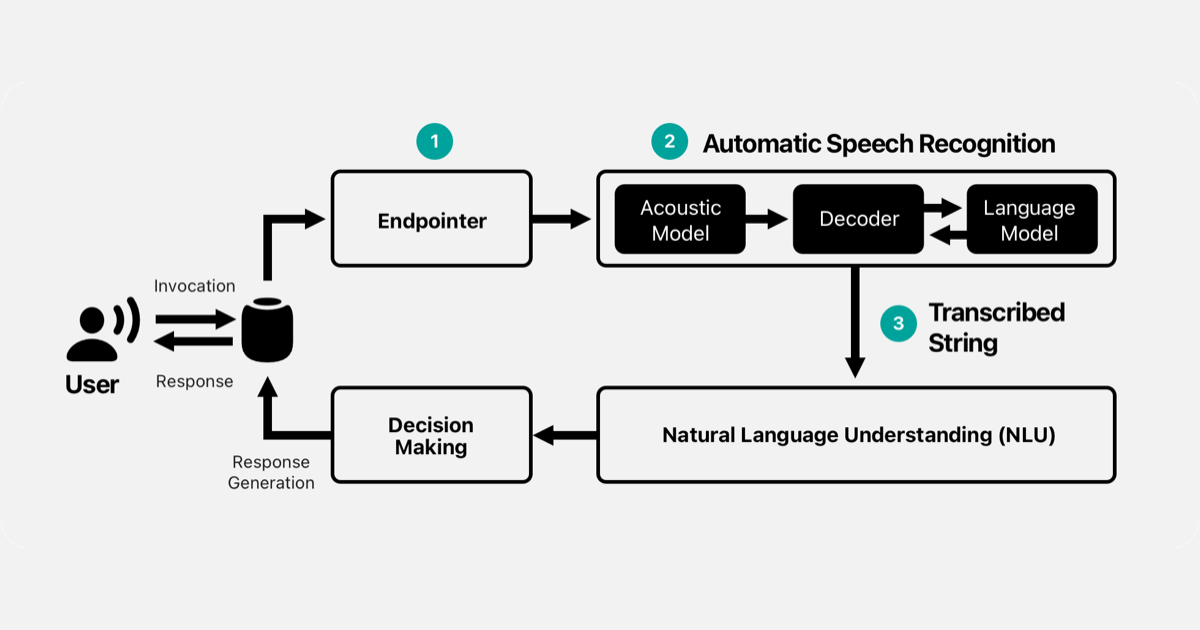
First, a microphone captures the speaker’s voice as an audio signal. The system then analyzes that signal and identifies important characteristics of the sound. Background noise may be reduced so that the spoken words can be understood more clearly.
Next, artificial intelligence models analyze the audio and compare the sound patterns with language patterns they have learned. The system predicts which words are most likely being spoken.
A language model also helps determine the meaning and context of the words. This is important because some words can sound similar but have completely different meanings.
For instance, the words “write” and “right” sound alike in many situations. A sophisticated system can use the surrounding sentence to determine which word makes sense.
Finally, the recognized speech is converted into text or translated into a command that the computer can execute.
The Role of Artificial Intelligence
Artificial intelligence has played a major role in the rapid development of speech recognition. Older systems often required users to speak in a very specific way and had difficulty understanding natural conversations.
Today’s systems are much more flexible. Machine learning algorithms can study enormous collections of speech data and learn how people naturally communicate. They can recognize different pronunciations, accents, speeds, and speaking patterns.
Deep learning has made these systems even more capable. Neural networks can identify complex relationships between sounds and words, allowing computers to process speech with much greater accuracy.
However, speech recognition is not perfect. Accents, unusual vocabulary, poor microphone quality, background noise, and overlapping conversations can still cause errors. Developers continue to improve these systems by training them on more diverse and realistic speech data.
Common Uses of Speech Recognition
Speech recognition is no longer limited to research laboratories. It is part of many everyday products and services.
Smartphones and Voice Assistants
One of the most familiar uses is on smartphones. People can dictate text messages, search for information, set reminders, make calls, and perform other tasks using their voice.
Voice assistants can also understand questions and commands, making it possible to interact with a device without typing.
Customer Service
Many companies use speech recognition in customer support systems. Automated systems can listen to customers, identify what they need, and direct them to the appropriate service.
Businesses can also analyze customer conversations to identify common complaints, questions, or trends. This can help companies improve their products and customer service.
Healthcare
Speech recognition has become useful in healthcare because medical professionals often need to create large amounts of documentation.
Doctors and other healthcare workers can dictate notes instead of typing everything manually. Specialized systems can convert their speech into written records, potentially saving time and reducing repetitive administrative work.
Education
Students and teachers can also benefit from voice technology. Speech recognition can support note-taking, transcription, language learning, and accessibility tools.
For students who have difficulty typing, speaking can provide a more convenient way to enter information into a computer. Language learners can use speech-based applications to practice pronunciation and receive feedback.
Automobiles
Modern vehicles increasingly support voice commands. Drivers can use their voice to control navigation, make phone calls, adjust certain settings, or interact with entertainment systems.
The main advantage is convenience. Drivers can perform certain tasks without taking their hands off the steering wheel or their eyes away from the road.
Benefits of Speech Recognition
One of the biggest advantages of speech recognition is convenience. Speaking is often faster and more natural than typing, especially for longer messages or documents.
It can also improve productivity. Professionals who need to create reports, notes, emails, or other documents can dictate their thoughts instead of manually entering every word.
Accessibility is another major benefit. People with physical disabilities or conditions that make typing difficult can use their voice to interact with computers and other devices.
Speech recognition can also make technology easier for people who are not comfortable with traditional keyboards or complicated interfaces. Instead of learning where different buttons are located, users can simply speak a command.
Another advantage is real-time transcription. Meetings, interviews, lectures, and conversations can be converted into written text, making information easier to review and organize later.
Challenges of Speech Recognition
Despite its progress, speech recognition still has limitations.
Background noise is one of the most common problems. If several people are talking at the same time or there is loud traffic nearby, the system may struggle to identify the correct words.
Accents and dialects can also affect accuracy. A system trained primarily on one type of English may perform differently when listening to regional accents or speakers with different pronunciation patterns.
Another challenge is context. Human beings naturally understand meaning from tone, situation, facial expressions, and previous conversations. Computers have traditionally struggled with these subtle details.
Privacy is another important concern. Voice-based systems may process recordings or other forms of speech data. Users therefore need to understand how their information is collected, stored, and used.
For businesses and organizations, security is also important. Voice data can contain sensitive information, so appropriate privacy protections are necessary.
Speech Recognition vs. Voice Recognition
Speech recognition and voice recognition are related, but they are not exactly the same thing.
Speech recognition focuses on what a person is saying. Its main purpose is to convert spoken language into text or commands.
Voice recognition, on the other hand, focuses more on who is speaking. It can analyze characteristics of a person’s voice to identify or verify that individual.
For example, a transcription system uses speech recognition to determine the words in a conversation. A security system might use voice recognition to verify a person’s identity.
Some modern applications can use both technologies together.
The Future of Speech Recognition
The future of speech recognition looks promising. As artificial intelligence becomes more advanced, computers are expected to understand speech more accurately and naturally.
Future systems may become better at understanding conversations rather than isolated commands. They may recognize context, emotions, different speaking styles, and complicated requests with greater accuracy.
Real-time translation is another area with significant potential. Imagine having a conversation with someone who speaks a different language while a device translates both sides almost instantly. Improvements in speech recognition and language models are making this type of communication increasingly practical.
We may also see speech interfaces become more common in workplaces, homes, vehicles, and public services. Instead of relying primarily on screens and keyboards, people could interact with many digital systems through natural conversation.
At the same time, responsible development will be important. Companies will need to address privacy, security, bias, and accuracy so that speech technologies work fairly for people from different backgrounds.
Conclusion
Speech recognition has changed the way humans interact with technology. What once seemed like futuristic technology is now available in smartphones, cars, computers, healthcare systems, customer service platforms, and countless other applications.
By converting spoken language into text or commands, this technology makes digital devices faster and easier to use. Artificial intelligence and machine learning have dramatically improved its capabilities, although challenges such as background noise, accents, privacy, and contextual understanding remain.
As technology continues to develop, speech recognition is likely to become an even more important part of everyday life. The goal is not simply to make computers hear our voices, but to make them understand our words and intentions in a way that feels natural.
The future of human-computer interaction may involve fewer keyboards, fewer buttons, and more conversations. Speech recognition is one of the technologies helping make that future possible.