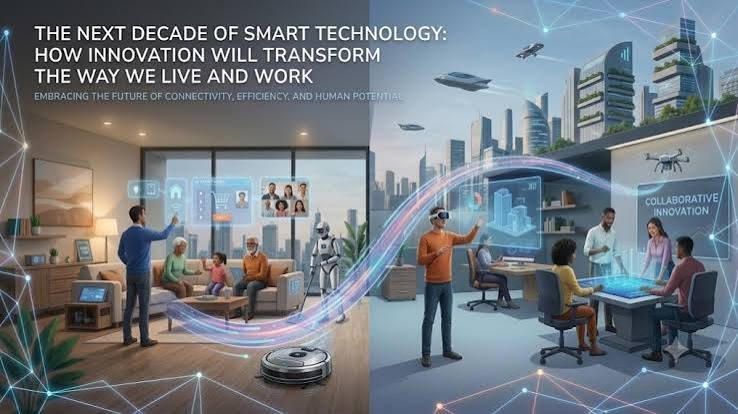
Technology has always played an important role in shaping human life. From the invention of the wheel to smartphones, the internet, and artificial intelligence, every major technological development has changed the way people live, work, communicate, and solve problems. However, the pace of innovation today is faster than ever before. What once seemed like science fiction is gradually becoming part of everyday life.
Future technology refers to the new ideas, inventions, systems, and digital solutions that are expected to influence our lives in the coming years. Artificial intelligence, robotics, quantum computing, biotechnology, smart cities, renewable energy, and advanced transportation are just some of the areas that could dramatically change our future.
The most exciting part is that many of these technologies are already being developed. While nobody can predict the future perfectly, current trends give us a good idea of what the technological world may look like in the years ahead.
Artificial Intelligence Will Become More Powerful
Artificial intelligence, commonly known as AI, is likely to remain one of the most important areas of future technology. AI systems are already being used for customer service, content creation, medical research, education, cybersecurity, business analysis, and many other purposes.
In the future, AI may become even more capable of understanding human language, recognizing complex patterns, and helping people make decisions. Instead of simply responding to commands, intelligent systems could work as personal digital assistants that understand a person’s preferences, schedule, goals, and daily routines.
AI could also transform healthcare. Advanced systems may help doctors identify diseases at an earlier stage, analyze medical images more accurately, and recommend personalized treatment options. Researchers are also exploring how AI can accelerate the development of new medicines.
However, the growth of AI will also create challenges. Questions about privacy, misinformation, employment, bias, and responsible use will become increasingly important. The future of AI will therefore depend not only on how powerful the technology becomes but also on how responsibly people choose to use it.
Robotics Will Enter More Areas of Daily Life
Robots are another major part of future technology. Industrial robots already perform repetitive and dangerous tasks in factories, but future robots could become much more flexible and intelligent.
Humanoid robots may eventually assist people in homes, hospitals, hotels, warehouses, and other environments. They could help older adults with daily activities, deliver items, clean spaces, or perform tasks that are physically difficult for humans.
Robots could also play an important role in dangerous environments. For example, they may be used to explore deep oceans, damaged buildings, disaster zones, or distant planets where sending humans would be risky.
The combination of robotics and artificial intelligence could make machines capable of learning from their surroundings and adapting to new situations. This does not necessarily mean that robots will replace humans everywhere. In many cases, the more realistic future may be one where humans and machines work together.
Quantum Computing Could Change Digital Technology
Traditional computers have become incredibly powerful, but they still face limitations when dealing with certain extremely complex problems. Quantum computing offers a completely different approach to processing information.
Quantum computers use principles of quantum mechanics to perform certain calculations in ways that are fundamentally different from conventional computers. Although practical, large-scale quantum computing is still developing, its potential is enormous.
In the future, quantum computers could contribute to areas such as drug discovery, materials science, climate modeling, logistics, and cryptography. Problems that may take traditional computers an extremely long time to solve could potentially be handled much more efficiently by suitable quantum systems.
This technology is still in its early stages, so it is unlikely to suddenly replace ordinary computers. Instead, quantum machines may work alongside conventional computing systems and be used for specialized tasks where they offer an advantage.
Smart Cities Will Make Urban Life More Connected
As populations grow, cities will need better ways to manage transportation, energy, water, waste, and public services. This is where smart-city technology could become increasingly valuable.
Future cities may use sensors and connected systems to monitor traffic, detect infrastructure problems, manage energy consumption, and improve public safety. Traffic lights could automatically adjust according to real-time traffic conditions, while public transportation systems could become more efficient through data analysis.
Smart buildings may also use automation to control lighting, heating, cooling, and security. This could reduce unnecessary energy consumption and make buildings more comfortable.
The goal of a smart city should not simply be to add more technology. Instead, technology should help create cities that are cleaner, safer, more efficient, and easier to live in.
Future Transportation Could Be Faster and Cleaner
Transportation is another area where future technology could create major changes. Electric vehicles are already becoming more common, and battery technology continues to improve.
Future vehicles may offer longer driving ranges, faster charging, and more advanced safety features. Autonomous driving technology could also change the way people travel, although widespread fully autonomous transportation will depend on technological, legal, and safety developments.
Electric buses, trains, and other forms of low-emission transportation could help reduce pollution in cities. In some places, advanced air transportation concepts may also become more practical.
The future may not be about one single type of vehicle. Instead, people could use a combination of electric cars, public transportation, autonomous services, bicycles, and other mobility options depending on their needs.
Biotechnology May Improve Human Health
Future technology will not be limited to computers and machines. Biotechnology could have an equally important impact on human life.
Scientists are exploring advanced methods for understanding genes, developing treatments, growing biological materials, and creating personalized medical solutions. In the future, medical care could become more tailored to an individual’s genetic information, lifestyle, and specific health needs.
Wearable devices may also become more sophisticated. Instead of simply counting steps or measuring heart rate, future health devices could continuously monitor a wider range of biological signals and provide early warnings about potential health problems.
Such developments could shift healthcare from treating illnesses after they appear toward detecting risks earlier and preventing problems whenever possible.
Renewable Energy Will Shape the Future
Energy is one of the biggest challenges facing the world. As demand increases, societies need reliable energy sources that can support economic growth without creating excessive environmental damage.
Solar and wind power are already important parts of the global energy landscape, but future technology could make renewable energy even more efficient and affordable. Improvements in batteries and other energy-storage systems could help solve the problem of storing electricity when renewable sources are not producing enough power.
New energy technologies may also emerge. Researchers continue to investigate advanced nuclear systems, improved batteries, hydrogen technologies, and other possible solutions.
A cleaner energy system could reduce pollution while supporting homes, businesses, transportation, and industrial production.
The Internet of Things Will Become More Invisible
The Internet of Things, or IoT, connects physical objects to digital networks. Today, examples include smart watches, home security cameras, connected appliances, and smart thermostats.
In the future, many more objects may become connected. Homes could automatically adjust their environment based on the people inside them. Refrigerators might track food supplies, while appliances could identify maintenance problems before they become serious.
The interesting development may be that connected technology becomes less noticeable. Instead of constantly interacting with apps and screens, people may simply expect their surroundings to respond intelligently to their needs.
Frequently Asked Questions About Future Technology
1. What is future technology?
Future technology refers to new inventions, systems, and innovations that are expected to shape our lives in the coming years. It includes areas such as artificial intelligence, robotics, quantum computing, biotechnology, renewable energy, smart cities, and advanced transportation.
2. How will artificial intelligence affect the future?
Artificial intelligence is expected to make many tasks faster, smarter, and more personalized. It could improve healthcare, education, business, transportation, customer service, and scientific research. At the same time, responsible AI development will be important to address concerns related to privacy, employment, and security.
3. Will robots replace human workers in the future?
Robots may replace some repetitive, dangerous, or physically demanding tasks, but they are unlikely to replace humans in every profession. Instead, humans and robots may increasingly work together. Human creativity, communication, judgment, and emotional intelligence will continue to be valuable.
4. How can future technology improve healthcare?
Future technology could help doctors detect diseases earlier, develop personalized treatments, and analyze medical information more efficiently. Advanced biotechnology, AI-powered systems, wearable devices, and genetic research may all contribute to better healthcare and disease prevention.
5. What role will renewable energy play in future technology?
Renewable energy is expected to play a major role in creating a cleaner and more sustainable future. Improvements in solar power, wind energy, batteries, and energy-storage systems could help reduce dependence on traditional fossil fuels and support growing global energy needs.
6. Will future technology make transportation safer?
Future transportation technology could improve safety through advanced driver-assistance systems, autonomous vehicles, better sensors, and smarter traffic management. Electric vehicles and improved public transportation could also make travel cleaner and more efficient.
7. What are the biggest risks of future technology?
Some major risks include privacy concerns, cybersecurity threats, job displacement, misinformation, electronic waste, and the misuse of artificial intelligence. These challenges can be managed through responsible development, strong regulations, education, and effective security measures.
8. How will future technology change everyday life?
Future technology could make everyday life more convenient and connected. Smart homes, intelligent digital assistants, advanced healthcare devices, autonomous transportation, personalized education, and connected appliances may become increasingly common. The biggest changes may happen gradually rather than all at once.
Conclusion
Future technology is set to influence almost every aspect of human life. From artificial intelligence and robotics to renewable energy, biotechnology, smart cities, and advanced transportation, emerging innovations could change the way people work, learn, travel, communicate, and manage their health.
However, technological progress is not automatically beneficial. The way new technologies are designed and used will determine whether they truly improve society. Privacy, cybersecurity, employment, environmental sustainability, and ethical responsibility must remain important considerations as innovation continues.
The future is impossible to predict with complete accuracy, but one thing is certain: technology will continue to evolve. By combining innovation with responsible decision-making, society can use future technology not only to make life more convenient but also to solve some of the world’s most difficult problems.