Deep learning has become one of the most important technologies in the modern world. From voice assistants and recommendation systems to self-driving cars and medical diagnosis, deep learning is quietly working behind many of the digital tools people use every day. Although the term may sound highly technical, the basic idea is surprisingly simple: deep learning allows computers to learn from large amounts of data and improve their performance without being programmed for every individual task.
As businesses continue to adopt artificial intelligence, understanding deep learning has become increasingly valuable. It is not only changing the technology industry but also influencing healthcare, finance, education, transportation, entertainment, and many other fields.
What Is Deep Learning?
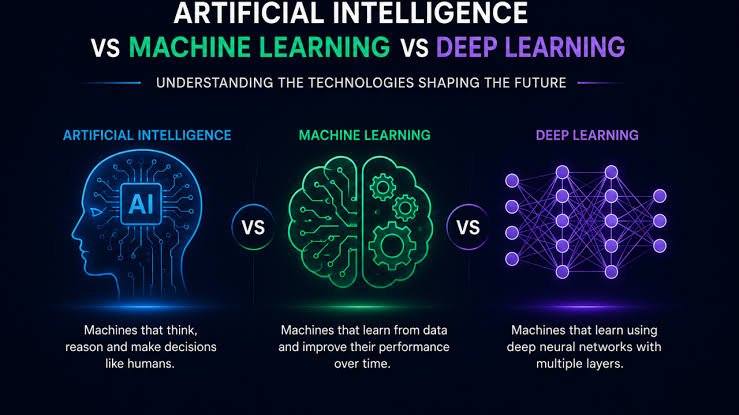
Deep learning is a branch of artificial intelligence and a specialized area of machine learning. It uses structures called artificial neural networks to process information and identify patterns in data.
The word “deep” refers to the multiple layers found inside these neural networks. Each layer processes information at a different level. For example, when a deep learning system analyzes an image of a person, the first layer might recognize simple shapes or lines. The next layers can identify more complex features, such as eyes, a nose, or a face. Eventually, the system can combine all of this information and determine what the image represents.
Unlike traditional computer programs, deep learning systems can learn from examples. Instead of giving the computer a detailed set of instructions for recognizing every possible object, developers provide large amounts of training data. The system then learns patterns from that data.
How Does Deep Learning Work?
At the center of deep learning are artificial neural networks. These networks are inspired, in a simplified way, by the human brain. They consist of interconnected nodes, often called artificial neurons.
A typical neural network contains three main types of layers: an input layer, hidden layers, and an output layer. The input layer receives information, while the hidden layers process that information. The output layer provides the final result.
During training, the network makes predictions based on the information it receives. If the prediction is incorrect, an algorithm adjusts the connections between the neurons. This process is repeated thousands or even millions of times.
Over time, the network becomes better at recognizing patterns. This learning process is one of the main reasons deep learning has become so powerful.
For example, imagine training a system to recognize cats in photographs. The computer would be given thousands of images, some containing cats and others containing different objects. Through repeated training, the network learns visual characteristics that help it distinguish a cat from other objects.
Deep Learning vs. Traditional Machine Learning
Deep learning and traditional machine learning are closely related, but they are not exactly the same.
Traditional machine learning often requires humans to select and prepare important features from the data. For instance, if developers want to create a system that identifies certain objects in images, they may need to manually determine which characteristics are important.
Deep learning can automatically discover many useful features from raw data. This reduces the need for manual feature engineering, especially when working with images, audio, text, and other complicated forms of information.
However, deep learning usually requires more data and greater computing power than many traditional machine learning methods. This is one reason why deep learning became especially successful as powerful graphics processors, large datasets, and cloud computing became widely available.
Major Applications of Deep Learning
Deep learning is already being used in many areas of everyday life. Some applications are obvious, while others operate behind the scenes.
Image and Facial Recognition
One of the best-known applications of deep learning is computer vision. Deep learning models can analyze photographs and videos to recognize objects, people, locations, and activities.
Facial recognition technology is another example. Modern systems can compare facial features and determine whether two images are likely to belong to the same person. These technologies are used in areas such as smartphone security, photography, retail, and security systems.
Voice Assistants
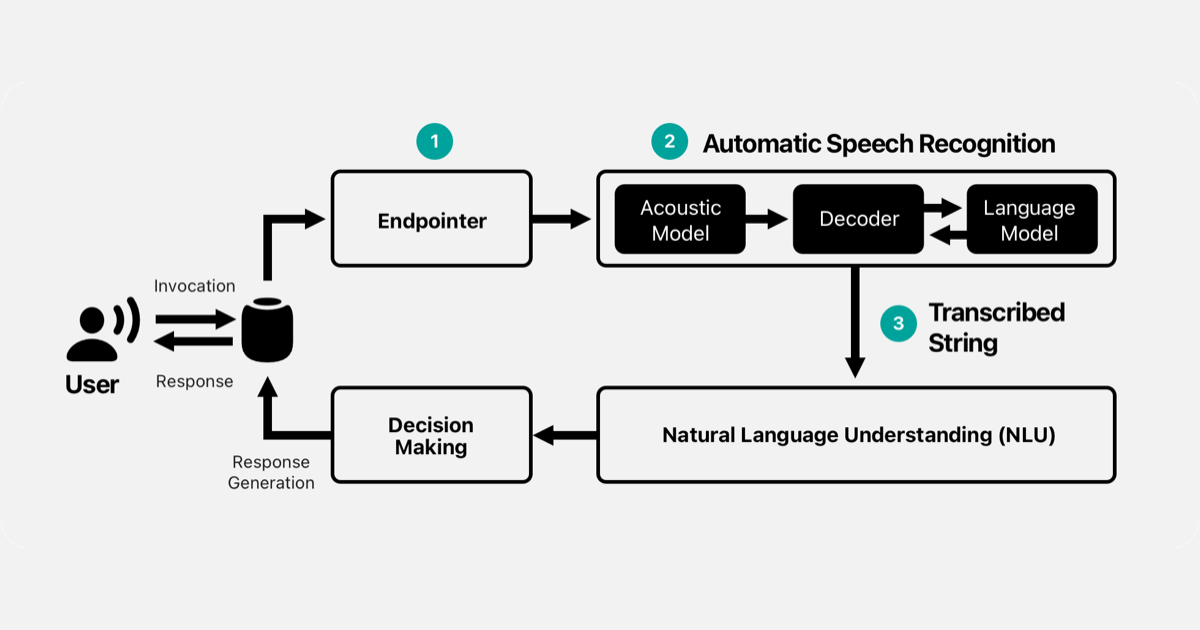
When people speak to voice assistants, deep learning helps convert spoken language into text and understand the meaning behind the request.
Systems need to handle different accents, speaking speeds, background noise, and ways of expressing the same idea. Deep learning models can learn from enormous amounts of speech and language data, allowing them to become increasingly accurate.
Healthcare
Healthcare is another field where deep learning has significant potential. Researchers and medical professionals use deep learning models to analyze medical images, identify patterns, and support diagnosis.
For example, models can be trained to examine X-rays, CT scans, MRI images, and other medical data. In certain situations, these systems may help doctors identify abnormalities that require further examination.
Deep learning can also support drug discovery and research by analyzing large datasets that would be difficult for humans to process manually.
Recommendation Systems
Whenever a streaming service recommends a movie, a music platform suggests a song, or an online store displays products that may interest you, artificial intelligence may be involved.
Deep learning models can analyze user behavior, preferences, searches, and interactions. They then use these patterns to predict what a person might want to watch, listen to, or purchase.
Autonomous Vehicles
Self-driving and advanced driver-assistance systems depend heavily on artificial intelligence. Deep learning can help vehicles understand their surroundings by processing information from cameras, radar, and other sensors.
The system may need to identify pedestrians, road signs, vehicles, traffic lights, and lane markings. It must then use this information to make decisions in real time.
Why Is Deep Learning So Powerful?
One major advantage of deep learning is its ability to work with complex and unstructured data. Traditional software often performs best when information follows clearly defined rules. Deep learning can handle more complicated inputs such as images, speech, videos, and natural language.
Another important advantage is scalability. As more relevant training data becomes available, deep learning systems can often improve their performance.
Deep learning can also automate tasks that once required significant human effort. This does not necessarily mean replacing people. In many cases, the technology is used to assist professionals, reduce repetitive work, and help people make better decisions.
Challenges of Deep Learning
Despite its impressive capabilities, deep learning is not perfect. One major challenge is the amount of data required for training. High-quality datasets can be expensive and time-consuming to collect, clean, and organize.
Computing requirements can also be significant. Training large models may require powerful hardware and substantial amounts of electricity.
Another challenge is interpretability. Some deep learning systems are often described as “black boxes” because it can be difficult to understand exactly why a model produced a particular result. This can be especially important in sensitive areas such as healthcare, finance, and law.
Bias is another concern. If the training data contains inaccurate or unfair patterns, the model may learn and reproduce those problems. For this reason, careful data collection, testing, monitoring, and human oversight are essential.
The Future of Deep Learning
The future of deep learning is likely to be closely connected with the continued development of artificial intelligence. Models are becoming increasingly capable of understanding text, images, audio, video, and combinations of different types of information.
One important direction is multimodal AI, where a single system can work with several forms of data at the same time. For example, a model might understand a written question, analyze an image, and produce a detailed response.
Deep learning may also become more efficient. Researchers are working on methods that allow powerful models to operate with less computing power and smaller amounts of data.
As the technology develops, businesses will likely find new ways to use deep learning for automation, customer service, research, cybersecurity, product development, and decision support.
How to Start Learning Deep Learning
For beginners, deep learning can initially seem complicated, but it becomes easier when studied step by step. A strong foundation in basic mathematics, programming, and machine learning can be helpful.
Python is one of the most popular programming languages for artificial intelligence and deep learning. Beginners can start by learning basic Python concepts and then move toward data analysis and machine learning.
After that, it is useful to understand concepts such as neural networks, training data, model evaluation, optimization, and overfitting. Practical projects are particularly valuable because they allow learners to see how theoretical concepts work in real situations.
Starting with small projects is often better than immediately trying to build a large and complicated AI system. A simple image classifier or text-based project can provide valuable hands-on experience.
ChatGPT said:
Bilkul! Deep Learning article ke liye 8 SEO-friendly FAQs:
Frequently Asked Questions About Deep Learning
1. What is Deep Learning?
Deep Learning is a branch of artificial intelligence that uses multi-layered neural networks to learn patterns from large amounts of data and make predictions or decisions.
2. How does Deep Learning work?
Deep Learning works by processing data through multiple layers of artificial neural networks. During training, the system learns from examples and adjusts its internal parameters to improve its results.
3. What is the difference between Deep Learning and Machine Learning?
Machine Learning is a broader field where algorithms learn from data. Deep Learning is a specialized type of machine learning that uses deep neural networks and can automatically learn complex features from large datasets.
4. What are the main applications of Deep Learning?
Deep Learning is used in image recognition, voice assistants, healthcare, recommendation systems, autonomous vehicles, natural language processing, fraud detection, and many other areas.
5. What are the benefits of Deep Learning?
The main benefits include high accuracy, automatic feature extraction, the ability to process complex data, and strong performance when large amounts of training data are available.
6. What are the challenges of Deep Learning?
Deep Learning can require large datasets, powerful computing resources, significant training time, and careful data preparation. Some models can also be difficult to interpret.
7. Is Deep Learning difficult to learn?
Deep Learning can be challenging for beginners, but learning Python, basic mathematics, machine learning concepts, and neural networks step by step can make the subject much easier to understand.
8. What is the future of Deep Learning?
The future of Deep Learning is expected to include more advanced AI systems, better multimodal models, improved automation, and more efficient models that can solve increasingly complex real-world problems.
Conclusion
Deep learning has changed the way computers process information and solve complex problems. By using multi-layer neural networks and large amounts of data, machines can learn patterns that would be extremely difficult to program manually.
Its applications range from image recognition and voice assistants to healthcare, recommendation systems, and autonomous vehicles. At the same time, challenges such as data requirements, computing costs, bias, privacy, and transparency must be taken seriously.
As artificial intelligence continues to evolve, deep learning will remain an important part of that progress. The technology is still developing, and its full potential has not yet been discovered. For businesses, researchers, students, and technology enthusiasts, learning about deep learning today can provide a valuable understanding of one of the technologies shaping the future.