Artificial intelligence has become an important part of modern technology, and one of the main reasons behind its rapid development is the growth of neural networks. From voice assistants and recommendation systems to medical research and self-driving technology, neural networks are helping computers perform tasks that once required human intelligence.
But what exactly are neural networks, and how do they work? Although the concept may sound highly technical, the basic idea is surprisingly easy to understand. A neural network is a computing system inspired by the way the human brain processes information. It learns patterns from data and uses those patterns to make predictions, recognize information, or solve problems.
In this article, we will explore what neural networks are, how they work, their different types, common applications, benefits, limitations, and what their future may look like.
What Are Neural Networks?
Neural networks are a type of machine learning model designed to recognize patterns and relationships within data. They consist of interconnected processing units commonly called artificial neurons.
The idea is loosely inspired by biological neurons in the human brain. A human brain contains billions of neurons that communicate with each other. Artificial neural networks use mathematical calculations to create a simplified version of this communication process.
A neural network can be trained using large amounts of information. For example, if you want a computer to recognize cats in photographs, you can provide it with thousands or millions of labeled images. During training, the network identifies characteristics and patterns that help distinguish a cat from other objects.
After learning from enough examples, the system can analyze a new image and estimate whether it contains a cat.
This ability to learn from examples is one of the main reasons neural networks have become so valuable in artificial intelligence.
How Do Neural Networks Work?
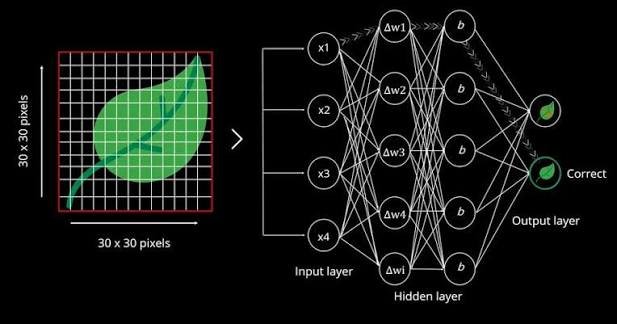
A basic neural network usually contains three main types of layers: an input layer, one or more hidden layers, and an output layer.
The input layer receives information. Depending on the task, the input could be numbers, images, text, audio, or other forms of data.
The hidden layers process the information. Each artificial neuron performs calculations and passes the result to other neurons. Modern neural networks can contain many hidden layers, allowing them to learn increasingly complex patterns.
Finally, the output layer produces the result. For example, a network designed to identify objects might produce probabilities for different categories such as dog, cat, car, or person.
During training, the network compares its predictions with the correct answers. When it makes a mistake, an optimization process adjusts the internal parameters, often called weights. Repeating this process many times gradually improves the model’s performance.
This learning process is what makes neural networks different from traditional computer programs that depend heavily on manually written rules.
The Role of Data
Data is one of the most important components of neural network training. A model cannot learn useful patterns without suitable information.
For example, a system designed to recognize human speech needs audio recordings and corresponding information about what was spoken. A model that predicts house prices might need data about location, property size, number of rooms, age, and previous sales.
The quality of the data matters just as much as the quantity. If training data is incomplete, inaccurate, biased, or poorly labeled, the resulting neural network may produce unreliable results.
This is why preparing and cleaning data is often a major part of machine learning projects.
Major Types of Neural Networks
There are several types of neural networks, and each is suited to different kinds of problems.
Feedforward Neural Networks
Feedforward neural networks are among the simplest forms. Information moves from the input layer through the hidden layers to the output layer without creating loops.
They can be useful for classification and prediction tasks where the order of information is not particularly important.
Convolutional Neural Networks
Convolutional neural networks, commonly known as CNNs, are especially effective for processing visual information. They are widely used in image recognition and computer vision.
CNNs can learn features such as edges, shapes, textures, and more complicated visual patterns. This makes them useful for applications including facial recognition, medical image analysis, object detection, and image classification.
Recurrent Neural Networks
Recurrent neural networks, or RNNs, were designed to work with sequential information. They can take previous information into account when processing new information.
This characteristic makes them useful for tasks involving sequences, such as language, speech, and time-series data. Although newer architectures have replaced RNNs in many advanced applications, they remain important for understanding the development of sequence-based machine learning.
Transformer-Based Networks
Transformers have become extremely influential in modern artificial intelligence. They are particularly powerful when working with language and other sequential or structured data.
Many modern AI systems use transformer-based architectures because they can efficiently identify relationships between different parts of an input. Their success has contributed significantly to advances in language understanding, content generation, translation, and other AI applications.
Real-World Applications
Neural networks are no longer limited to research laboratories. They are being used across many industries.
In healthcare, they can assist with medical image analysis, disease prediction, drug research, and patient data analysis. They can help professionals identify patterns that may be difficult to detect manually, although human expertise remains essential for important medical decisions.
In finance, neural networks can be used for fraud detection, risk assessment, forecasting, and analyzing financial transactions.
In retail and e-commerce, recommendation systems can study customer behavior and suggest products that a person may be interested in. This technology is one reason online shopping platforms can provide highly personalized experiences.
In transportation, neural networks contribute to traffic prediction, route optimization, driver assistance systems, and research into autonomous vehicles.
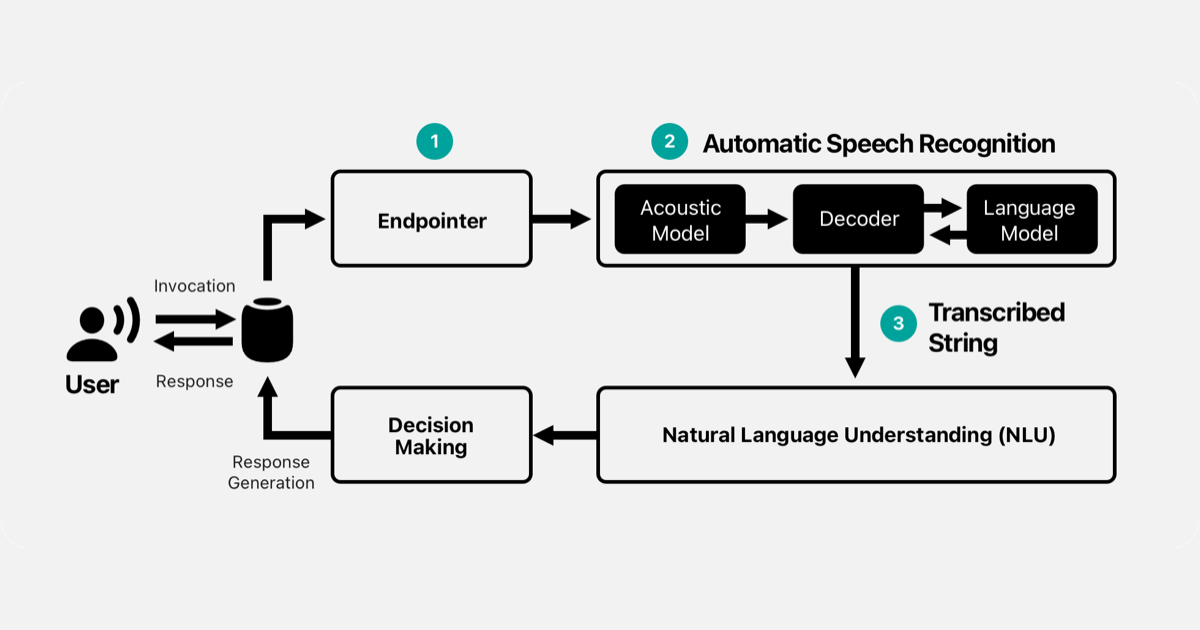
They are also widely used in natural language processing. Applications such as translation tools, chatbots, text classification, speech recognition, and AI assistants rely on advanced machine learning techniques.
Benefits of Neural Networks
One major advantage of neural networks is their ability to learn complicated relationships from data. Instead of requiring programmers to define every possible rule, the system can discover useful patterns through training.
They can also handle large and complex datasets. When enough high-quality training data and computing resources are available, neural networks can achieve impressive performance in tasks such as image and speech recognition.
Another benefit is flexibility. The same general concept can be adapted for different industries and problems. With appropriate training data and architecture, a neural network can be used for classification, prediction, recognition, generation, and many other tasks.
Neural networks can also improve as training methods, datasets, and computing technology develop.
Limitations and Challenges
Despite their capabilities, neural networks are not perfect.
One major challenge is their dependence on data. Training an advanced model may require enormous amounts of information, and collecting or preparing that data can be expensive and time-consuming.
Another issue is computational cost. Large neural networks can require powerful hardware and significant amounts of energy, especially during training.
Neural networks can also be difficult to interpret. Sometimes a model produces a prediction without providing a simple explanation that a human can easily understand. This is often described as the “black box” problem.
Bias is another important concern. If a training dataset contains harmful or unfair biases, a model may learn and reproduce them. Developers therefore need to carefully evaluate training data and model behavior.
Finally, high performance during testing does not automatically mean that a system will work perfectly in every real-world situation. Models can encounter unusual examples that were not represented adequately during training.
Neural Networks and Deep Learning
The terms neural networks and deep learning are closely related, but they are not exactly the same thing.
Deep learning generally refers to neural networks with multiple layers that can learn increasingly complex representations of data. In simple terms, deep learning is a more advanced approach built around neural network architectures.
For example, a deep learning model analyzing an image might first learn simple visual features, then combine those features into shapes, and eventually identify more complex objects.
The availability of large datasets, powerful processors, and improved algorithms has played a major role in the growth of deep learning.
The Future of Neural Networks
The future of neural networks is likely to involve greater efficiency, broader applications, and more capable AI systems.
Researchers are working on ways to make models smaller, faster, and less expensive to operate. This could allow sophisticated AI capabilities to run directly on smartphones, vehicles, industrial equipment, and other devices.
Another important direction is improving reliability and transparency. As AI becomes more involved in areas such as healthcare, finance, education, and public services, people need systems that are not only accurate but also responsible and understandable.
There is also increasing interest in combining neural networks with other approaches to artificial intelligence. Instead of relying on one technique for every problem, future systems may combine different models and tools to improve reasoning, planning, perception, and decision-making.
At the same time, ethical considerations will remain important. Questions about privacy, bias, security, copyright, employment, and responsible AI development will continue to shape how neural network technology is created and used.
Conclusion
Neural networks have changed the way computers learn from information. Rather than depending entirely on manually programmed rules, these systems can identify patterns in data and use what they learn to make predictions or perform complex tasks.
Their applications now extend from healthcare and finance to entertainment, transportation, shopping, and language technology. While they offer impressive capabilities, they also come with challenges involving data quality, computing requirements, transparency, and bias.
As technology continues to develop, neural networks will likely become even more efficient and integrated into everyday life. Understanding how they work is therefore becoming increasingly valuable, not only for technology professionals but for anyone interested in the future of artificial intelligence.
The most important point is that neural networks are not magic. They are sophisticated mathematical systems that learn from examples, and their effectiveness depends heavily on the data, design, training, and goals behind them. Used responsibly, they have the potential to solve difficult problems and open the door to new possibilities across many areas of human life.