Introduction
Artificial Intelligence (AI) has become one of the most influential technologies of the modern era. From smartphones and virtual assistants to healthcare, education, transportation, and business, AI is transforming how people live, work, learn, and communicate. What once seemed like science fiction is now part of everyday life. People use AI to write emails, translate languages, analyze information, generate images, and solve complex problems.
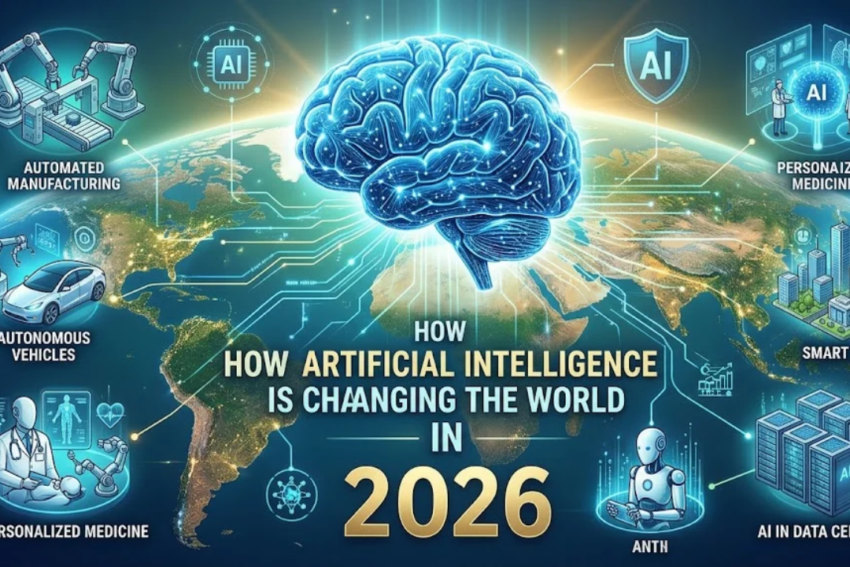
In 2026, artificial intelligence continues to reshape industries and create new opportunities for individuals, businesses, and governments. Companies are adopting AI to improve productivity, healthcare professionals are using it to support diagnosis, and educational institutions are exploring personalized learning systems. At the same time, the rapid development of AI raises important questions about privacy, employment, misinformation, and responsible technology use.
Understanding how artificial intelligence works, where it is being used, and what its future may look like is essential for anyone who wants to succeed in an increasingly digital world.
What Is Artificial Intelligence?
Artificial Intelligence is a branch of computer science that focuses on developing systems capable of performing tasks that typically require human intelligence. These tasks may include recognizing speech, understanding language, identifying patterns, solving problems, making predictions, and generating new content.
AI systems learn from data, follow programmed rules, or combine different computational techniques to produce useful results. Their capabilities depend on their design, training data, available computing resources, and the specific task they are intended to perform.
Several important technologies contribute to modern AI:
1. Machine Learning: Machine learning allows computers to identify patterns in data and improve their performance on specific tasks without requiring programmers to define every individual rule.
2. Deep Learning: Deep learning uses artificial neural networks with multiple layers to process complex information, including images, audio, and language.
3. Natural Language Processing: This technology helps computers understand, interpret, and generate human language. It powers many chatbots, translation tools, and writing assistants.
4. Computer Vision: Computer vision enables machines to analyze images and videos, helping them recognize objects, interpret medical scans, and inspect products.
5. Generative AI: Generative AI creates new content, such as text, images, music, video, and computer code, based on patterns learned during training.
Together, these technologies are expanding the range of tasks that computers can perform and changing the relationship between humans and machines.
1. AI Is Transforming Healthcare
Healthcare is one of the most promising areas for artificial intelligence. Medical professionals must analyze large amounts of information, identify diseases, monitor patients, and make decisions that can significantly affect people’s lives. AI can help clinicians manage some of these responsibilities more efficiently.
Faster Medical Image Analysis
AI systems can analyze medical images, including X-rays, CT scans, MRI scans, and mammograms. In specific applications, these systems can identify suspicious patterns that may indicate disease.
For example, AI-assisted tools can help radiologists detect possible lung abnormalities or identify areas that require closer examination. These systems can support medical professionals by highlighting findings, prioritizing urgent cases, and reducing repetitive work.
However, AI-generated findings are not automatically correct. Medical imaging tools must be appropriately validated, and qualified professionals remain responsible for interpreting results in their clinical context.
Improving Laboratory Medicine
Artificial intelligence is also creating opportunities in clinical laboratories. Laboratories process thousands of samples and generate large volumes of diagnostic data every day.
AI can help identify unusual laboratory patterns, monitor instrument performance, detect quality-control trends, and support the interpretation of complex results. In research settings, machine learning can also help identify relationships between biomarkers and diseases.
For instance, researchers studying cancer biomarkers may use AI to analyze molecular data and investigate patterns that could help distinguish different disease subtypes.
These applications could contribute to more efficient workflows and better-informed clinical decisions. Nevertheless, patient safety, analytical validation, data quality, and human oversight remain essential.
Personalized Treatment
AI can help researchers analyze genetic information, medical histories, and treatment outcomes to investigate why patients respond differently to therapies.
In the future, increasingly sophisticated systems may help clinicians select treatments that better match individual patients. Some forms of precision medicine already use computational methods, although the extent of AI involvement varies by application.
AI is therefore not replacing healthcare professionals. Instead, its greatest potential lies in supporting their expertise and allowing them to focus more attention on patients.
2. AI Is Revolutionizing Education
Education is another field experiencing significant change. Traditional teaching often follows a common curriculum and pace, even though students have different abilities, interests, and learning needs.
Artificial intelligence can help make education more personalized and accessible.
Personalized Learning Experiences
AI-powered learning platforms can analyze a student’s responses and identify topics that require additional practice. They may then recommend exercises, explanations, or learning materials suited to that student’s progress.
For example, a student struggling with mathematics may receive simpler explanations and additional practice questions. Another student who understands the fundamentals may move on to more advanced problems.
This approach can make learning more flexible and help students develop confidence in difficult subjects.
AI as a Study Assistant
AI chatbots can explain complicated concepts, summarize lengthy documents, generate practice questions, and help students organize their study schedules.
Students learning biology, chemistry, computer science, or other technical subjects can use AI to explore unfamiliar concepts through examples and step-by-step explanations.
However, AI-generated answers can contain factual errors, outdated information, or fabricated references. Students should verify important claims using textbooks, scientific literature, and trusted educational sources.
Supporting Teachers
Teachers can use AI tools to develop lesson plans, prepare quizzes, create educational examples, and adapt learning materials for different levels of ability.
These tools may reduce time spent on repetitive administrative tasks, allowing educators to focus more on discussion, mentorship, and student development.
At the same time, schools must establish clear policies regarding academic integrity, plagiarism, data privacy, and appropriate AI use. Students should use AI to strengthen their understanding rather than simply submit machine-generated work.
3. AI Is Changing the Business World
Businesses are adopting artificial intelligence to improve productivity, understand customers, manage operations, and make decisions based on data.
From small online stores to multinational corporations, AI offers tools that can automate repetitive tasks and support more efficient workflows.
Automation of Routine Tasks
Many organizations spend significant time handling repetitive activities such as sorting documents, processing invoices, answering common customer questions, and preparing reports.
AI-powered systems can automate parts of these processes. Employees may then devote more time to tasks requiring creativity, communication, judgment, and problem-solving.
For example, a customer service department can use an AI chatbot to answer frequently asked questions while transferring complicated cases to human representatives.
Automation does not necessarily eliminate every job associated with these tasks. Its effects depend on how organizations redesign their workflows and whether employees receive opportunities to develop new skills.
Smarter Marketing
AI helps businesses analyze customer behavior, identify patterns, and create more relevant marketing campaigns.
Online retailers may use recommendation systems to suggest products based on browsing activity and previous purchases. Marketing teams can also use AI to draft advertising copy, brainstorm campaign ideas, and analyze customer feedback.
These applications can improve efficiency, but businesses must respect privacy laws and avoid using personal data in inappropriate or discriminatory ways.
Better Business Decisions
Companies generate large amounts of information through sales, inventory systems, customer interactions, and financial operations.
AI can help analyze these datasets, forecast demand, identify unusual transactions, and estimate future trends.
For example, a retailer may use predictive analytics to estimate which products are likely to sell during a particular season. This information can help the company manage inventory and reduce unnecessary costs.
Nevertheless, predictions are not guarantees. Businesses must consider uncertainty, changing market conditions, and the quality of the data used by their models.
4. AI Is Reshaping Transportation
Transportation systems are becoming increasingly connected and data-driven. Artificial intelligence plays an important role in navigation, traffic management, vehicle safety, and logistics.
Self-Driving Technology
Autonomous vehicle systems use cameras, radar, lidar, maps, and other sensors to understand their surroundings. AI models help interpret this information and support decisions about steering, acceleration, braking, and obstacle avoidance.
Although automated driving capabilities have advanced considerably, fully autonomous operation in all road conditions remains a difficult technical and safety challenge. Many commercially available systems still require active human supervision.
The long-term potential includes improved mobility, more efficient transportation, and fewer crashes caused by certain types of human error. Achieving these benefits will require extensive testing, clear regulations, and reliable safety systems.
Traffic Management
AI can analyze traffic conditions and help transportation authorities optimize signal timings, identify congestion, and predict periods of heavy traffic.
Navigation applications already use data-driven algorithms to estimate journey times and recommend alternative routes.
When implemented effectively, these systems may reduce delays, improve fuel efficiency, and support better use of existing road infrastructure.
Logistics and Delivery
Shipping companies and delivery services use predictive analytics and optimization algorithms to plan routes, estimate delivery times, and manage warehouse operations.
AI can help organizations process orders efficiently and respond to changes in demand.
These improvements can benefit businesses and customers by reducing operational delays and making supply chains more responsive.
5. AI Is Transforming Science and Research
Scientific research increasingly depends on analyzing complex datasets, running computational experiments, and identifying patterns that may be difficult for humans to detect unaided.
Artificial intelligence is helping researchers investigate questions across biology, chemistry, physics, environmental science, and many other disciplines.
Drug Discovery
Developing a new medicine traditionally requires substantial time, funding, laboratory experimentation, and clinical testing.
AI can assist researchers by predicting molecular properties, identifying potential drug candidates, estimating how molecules may interact with biological targets, and helping prioritize experiments.
These methods can narrow the number of candidates that scientists need to investigate experimentally.
However, a promising computational prediction is only an early step. A medicine must still undergo appropriate laboratory studies, clinical trials, and regulatory evaluation to establish safety and effectiveness.
Cancer Research
Cancer research is an area where AI has considerable potential. Scientists can use machine learning to analyze genomic data, investigate tumor characteristics, and search for patterns associated with disease progression or treatment response.
AI may also support research into liquid biopsies, which investigate biological material such as circulating tumor DNA in blood or other bodily fluids.
By analyzing large molecular datasets, researchers can explore potential biomarkers for earlier detection, treatment monitoring, and disease classification.
These applications are promising, but their clinical usefulness depends on rigorous validation across appropriate patient populations.
Climate and Environmental Research
AI can help scientists analyze satellite images, monitor deforestation, forecast certain environmental conditions, and improve models of energy consumption.
In renewable energy, predictive systems can estimate solar and wind power generation using weather and historical performance data.
AI may also help cities optimize electricity distribution and identify opportunities to reduce waste.
Although AI itself requires computing resources and electricity, carefully designed applications may contribute to more efficient resource management.
6. AI Is Changing Everyday Life
Artificial intelligence is no longer limited to laboratories, research institutions, or large companies. Many people encounter it through ordinary digital activities.
Smartphones and Virtual Assistants
Smartphones use AI-related technologies for speech recognition, photography, predictive text, translation, and personalized recommendations.
Voice assistants can respond to spoken commands, set reminders, provide information, and control compatible smart-home devices.
These features make digital devices more convenient and accessible for many users.
Content Creation
Generative AI tools can produce drafts of articles, create illustrations, summarize documents, generate presentation ideas, and assist with coding.
For freelancers, students, designers, and small businesses, these capabilities can reduce the time required to begin a project.
However, users should review AI-generated content for accuracy, originality, bias, and compliance with copyright or professional requirements.
Smart Homes
AI-enabled devices can learn from usage patterns and help manage lighting, heating, cooling, security notifications, and energy consumption.
For example, a smart thermostat may adjust settings based on occupancy and temperature patterns.
The benefits depend on the quality of the devices, their compatibility, and the user’s preferences. Security updates and careful privacy settings are also important.
7. How AI Is Changing Employment
One of the most widely discussed questions about artificial intelligence concerns the future of work.
AI can automate certain activities, but its effects vary significantly across occupations. Some jobs involve many routine, predictable tasks that can be automated. Others depend heavily on physical work, human relationships, complex judgment, or responsibility for high-stakes decisions.
Jobs That May Change
Administrative support, basic content production, customer service, data processing, and some analytical activities may change as organizations adopt AI tools.
In many cases, AI may automate only parts of a role rather than eliminate the entire occupation.
For example, a marketing professional may use AI to generate initial campaign ideas but still need to understand customers, develop strategy, verify claims, and make creative decisions.
Similarly, laboratory professionals may use AI-assisted systems for data analysis while continuing to manage sample quality, troubleshoot instruments, and interpret results within laboratory procedures.
New Career Opportunities
The growth of AI is also creating demand for people who can develop, evaluate, implement, and govern these systems.
Potential career areas include:
- Machine learning engineering
- Data science and analytics
- AI software development
- AI system testing and evaluation
- Cybersecurity
- AI governance and compliance
- Healthcare informatics
- Robotics and automation
Not every role requires an advanced degree in computer science. Some positions emphasize domain knowledge, analytical thinking, communication, or the ability to use AI tools effectively.
The Importance of Reskilling
Workers can prepare for technological change by developing digital literacy, problem-solving skills, communication abilities, and familiarity with relevant AI applications.
Learning how to verify AI outputs, protect confidential information, and recognize the limitations of automated systems will become increasingly valuable.
The goal should not simply be to compete with machines. It should be to learn how to use technology effectively while strengthening the abilities that make human contributions valuable.
8. The Major Risks and Challenges of Artificial Intelligence
Despite its benefits, AI creates significant ethical, social, and technical challenges.
Privacy and Data Security
AI systems may process personal information, medical records, financial details, photographs, and workplace documents.
If this information is collected or handled improperly, it can expose individuals to privacy violations or identity theft.
Organizations should apply appropriate security controls, limit unnecessary data collection, and follow relevant privacy regulations.
Users should also avoid entering sensitive personal or professional information into AI services unless the service is approved for that purpose.
Bias and Discrimination
AI systems learn from data, and that data may reflect existing social inequalities or historical discrimination.
For example, a poorly designed hiring algorithm could disadvantage certain groups if its training data or decision criteria are biased.
Developers and organizations must evaluate AI systems for fairness, monitor their performance, and provide appropriate human review when decisions affect people’s rights or opportunities.
Misinformation and Deepfakes
Generative AI can create convincing but false images, videos, audio recordings, and written statements.
Such content can be used for scams, impersonation, harassment, and the spread of misinformation.
People should evaluate the reliability of sources, verify important claims independently, and be cautious when content appears designed to provoke an immediate emotional reaction.
Overdependence on Technology
Excessive reliance on AI can weaken independent thinking if people accept its answers without questioning them.
AI systems can produce incorrect explanations with considerable confidence. They may also misunderstand context or fail when faced with unfamiliar situations.
Education and professional training should therefore emphasize critical thinking, verification, and the ability to work without automated assistance when necessary.
Accountability
When an AI-assisted decision causes harm, determining responsibility can be complicated.
Clear policies are needed to establish who is responsible for system design, deployment, supervision, and final decisions.
In high-stakes areas such as medicine, finance, transportation, and public services, AI should be used within appropriate safeguards and accountability structures.
9. What Is the Future of Artificial Intelligence?
The future of AI will depend on scientific progress, economic investment, government policies, public trust, and society’s ability to manage its risks.
Several developments are likely to influence the coming years.
More capable AI assistants: AI systems may increasingly help people complete multi-step tasks, organize information, and coordinate digital workflows. Their reliability will depend on the quality of their tools, permissions, and oversight.
Greater integration into healthcare: AI may become more widely integrated into medical imaging, clinical documentation, laboratory analytics, drug discovery, and research. Adoption will depend on clinical evidence, regulation, and practical benefits.
Advances in robotics: Improvements in perception, planning, and control may allow robots to perform a broader range of tasks in factories, warehouses, hospitals, and other environments.
Personalized education: AI-supported educational tools may offer more adaptable learning experiences, giving students additional explanations and helping teachers identify learning gaps.
Responsible AI development: Governments, researchers, and businesses will need to strengthen standards for privacy, security, transparency, fairness, and accountability.
It is also important to recognize that technological forecasts are uncertain. Some AI applications may advance rapidly, while others may encounter scientific, financial, regulatory, or practical barriers.
The most useful approach is to prepare for change while evaluating new technologies based on evidence rather than exaggerated promises.
10. How Individuals Can Prepare for the AI Era
People do not need to become AI researchers to benefit from artificial intelligence. They can begin by learning the basics and exploring tools relevant to their studies, careers, and personal interests.
Here are five practical steps:
- Learn the fundamentals: Understand basic AI concepts, machine learning, generative AI, and the limitations of automated systems.
- Experiment with useful tools: Explore AI applications for writing, research, data analysis, design, or other tasks relevant to your work.
- Develop critical thinking: Verify important information, compare sources, and avoid assuming that an AI-generated answer is always correct.
- Strengthen human skills: Improve communication, creativity, adaptability, ethical judgment, and problem-solving.
- Protect personal information: Follow data privacy practices and use approved tools when handling confidential or sensitive information.
These steps can help individuals use AI productively while maintaining control over their decisions and responsibilities.
Conclusion
Artificial intelligence is changing the world in 2026 by transforming healthcare, education, business, transportation, scientific research, and everyday life. It offers opportunities to improve efficiency, analyze complex information, personalize services, and accelerate discovery.
However, AI is not a perfect solution to every problem. Concerns about privacy, bias, misinformation, employment, and accountability demonstrate why responsible development and careful use are essential.
The future of AI will not be determined by technology alone. It will also depend on how people choose to design, regulate, adopt, and supervise these systems.
For students, professionals, entrepreneurs, and organizations, understanding AI is becoming an important part of digital literacy. Those who learn to use it thoughtfully, verify its results, and combine its capabilities with human judgment will be better prepared to navigate the opportunities and challenges ahead.
Ultimately, the most promising future is not one in which machines replace human intelligence entirely, but one in which artificial intelligence helps people solve problems, discover new possibilities, and improve the quality of life around the world.