Introduction
Artificial intelligence is changing the way people interact with technology. In the past, computers primarily followed instructions entered by users. Today, AI-powered assistants can understand questions written in natural language, generate content, summarize documents, analyze data, and help people solve complex problems. One of the most recognizable examples of this transformation is ChatGPT.
AI-powered assistants are becoming useful tools for students, teachers, business owners, healthcare professionals, programmers, researchers, and ordinary users. They can help people complete tasks more efficiently, explore new ideas, and access information in more convenient ways.
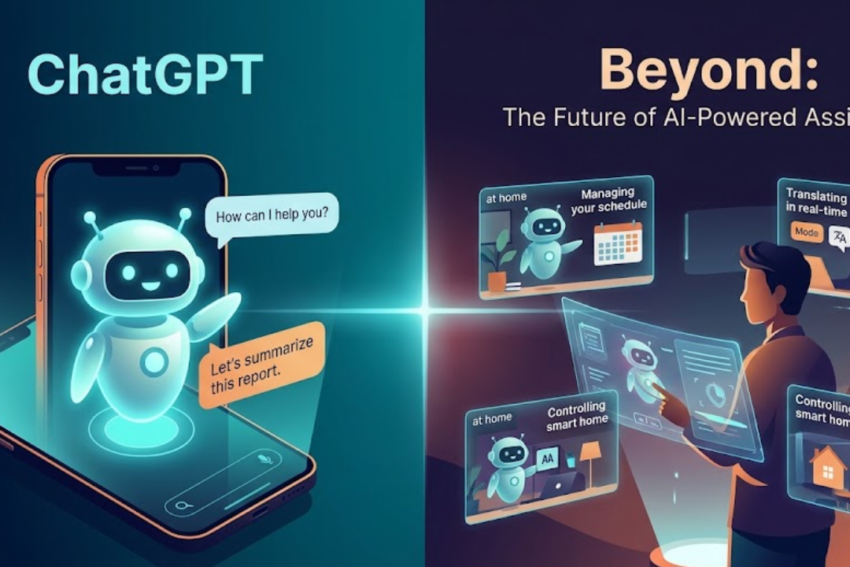
However, ChatGPT is only one part of a rapidly developing technological landscape. New AI systems are expanding beyond simple conversations to include image understanding, voice interaction, software development, research assistance, and automated workflows.
As these technologies continue to evolve, an important question emerges: What will the future of AI-powered assistants look like, and how will they change our lives?
What Are AI-Powered Assistants?
AI-powered assistants are software systems designed to help users perform tasks through natural language, voice commands, or other forms of interaction. They use artificial intelligence techniques to interpret requests and generate useful responses.
Traditional digital assistants generally relied on predefined commands and limited functions. Modern AI assistants can handle more flexible requests, understand context within a conversation, and respond to a wider range of questions.
For example, a user can ask an AI assistant to explain a scientific concept, summarize a report, draft a professional email, or help troubleshoot a programming problem.
These capabilities are made possible by several technologies.
Large Language Models
Large language models, commonly called LLMs, are AI systems trained on large collections of text and other data. They learn statistical patterns that help them generate language, answer questions, summarize information, and perform various text-based tasks.
ChatGPT uses advanced language models to understand prompts and produce responses. However, its answers are generated computationally rather than through human consciousness or personal experience.
Natural Language Processing
Natural language processing enables computers to work with human language. It supports tasks such as translation, sentiment analysis, text classification, and question answering.
This technology allows users to communicate with AI assistants without learning a programming language or memorizing complicated commands.
Multimodal AI
Modern AI systems may work with multiple types of information, including text, images, audio, and sometimes video.
For instance, a user may provide a photograph of a mathematical problem and ask for an explanation. Another user may speak a question aloud instead of typing it.
Multimodal capabilities make AI assistants more flexible and accessible across different situations.
1. ChatGPT: A New Way to Interact With Technology
ChatGPT has helped popularize conversational artificial intelligence by allowing people to communicate with computers using ordinary language.
Instead of navigating complicated menus or searching through numerous websites, users can describe what they need and receive a response in a conversational format.
Supporting Students and Learners
Students can use ChatGPT to understand difficult subjects, practice questions, organize revision schedules, and explore unfamiliar concepts.
For example, a student studying biology might ask for an explanation of DNA replication using simple language. The assistant can provide an overview, explain important terminology, and create practice questions.
A programming student can request examples of code and explanations of how different functions work.
Nevertheless, students should verify important information against textbooks, scientific publications, and reliable educational resources. AI-generated explanations can contain errors, and using AI to complete assignments without understanding the material may undermine learning.
Improving Workplace Productivity
Professionals often spend considerable time preparing reports, writing emails, organizing information, and creating presentations.
AI assistants can help with these tasks by generating first drafts, summarizing lengthy documents, suggesting improvements, and organizing ideas.
For example, a manager can use an AI assistant to develop an initial meeting agenda. A researcher can request a simplified explanation of a technical concept before examining the original scientific literature.
These applications can save time, but the final output should still be reviewed for accuracy, tone, confidentiality, and suitability.
Helping With Creative Work
Writers, designers, marketers, and content creators can use AI assistants to brainstorm ideas, outline articles, refine headlines, and develop alternative approaches to a project.
Rather than replacing creativity entirely, AI can act as a starting point for human decision-making.
The most useful results often come when people combine AI-generated suggestions with their own knowledge, experience, and originality.
2. From Chatbots to AI Agents
One of the most important developments in artificial intelligence is the movement from systems that primarily answer questions toward systems that can help carry out multi-step tasks.
A conventional chatbot responds to a request. An AI agent may also plan a sequence of actions, use authorized tools, examine the results, and continue working toward a defined objective.
For example, a basic assistant might suggest how to organize a research project. A more capable agent could potentially help search approved sources, organize findings, compare information, and prepare a structured draft.
Similarly, an agent used in a business might retrieve information from authorized software, prepare a report, and flag missing details for review.
These capabilities could change how people interact with computers. Instead of manually performing every step, users may increasingly describe the desired outcome and supervise the process.
However, AI agents can make mistakes, misunderstand instructions, or take inappropriate actions if they are poorly designed. Important operations involving money, private information, account settings, or external communications require suitable permissions and human oversight.
3. AI Assistants in Healthcare
Healthcare is a promising area for AI-powered assistants because medical professionals must manage extensive information while making decisions that affect patient well-being.
AI assistants can support administrative work, medical education, research, and selected clinical workflows.
Medical Information and Documentation
Healthcare organizations may use AI tools to help draft clinical notes, summarize patient histories, organize documents, and reduce repetitive administrative tasks.
When appropriately implemented, these tools may allow clinicians to devote more time to patient communication and clinical responsibilities.
However, AI-generated documentation must be checked by qualified staff. Errors in medication details, diagnoses, test results, or patient histories can have serious consequences.
Supporting Laboratory Professionals
AI assistants may also benefit clinical laboratory scientists and medical laboratory technologists.
Laboratory professionals can use AI to study laboratory concepts, review quality-control principles, understand analytical methods, and learn how different tests are used in diagnosis.
For example, an AI assistant could explain the difference between screening and confirmatory tests, describe the principles of coagulation testing, or help a learner understand how immunoassays work.
In laboratory research, AI can support the analysis of large datasets, investigation of biomarker patterns, and development of hypotheses.
However, general-purpose AI assistants should not replace validated laboratory procedures, instrument instructions, professional judgment, or established clinical guidelines. Patient-specific decisions must follow appropriate clinical and laboratory protocols.
Medical Research
Researchers can use AI assistants to organize research questions, summarize scientific papers, improve draft writing, and assist with certain data-analysis tasks.
Specialized systems may also help researchers identify relevant publications or explore relationships between genes, proteins, diseases, and treatments.
AI-generated references and scientific claims must be independently verified. A convincing explanation does not guarantee that its sources exist or that its conclusions are supported by evidence.
4. Personalized AI Assistants
The future of AI-powered assistance may involve increasingly personalized systems that adapt to a user’s goals, preferences, and working habits.
For example, a student might use an assistant to create a revision schedule based on upcoming examinations. A business owner might use one to organize recurring administrative tasks. A researcher might use an assistant to maintain a structured list of research questions and project milestones.
Personalization can make technology more useful by reducing the need to repeat instructions and explain preferences.
However, personalization also introduces privacy concerns. Assistants that retain personal information must handle it responsibly, and users should understand what information is stored, how it is used, and how to manage their settings.
Personalization should give users greater control rather than create unnecessary dependence on technology.
5. Voice and Multimodal Assistants
Typing is only one way to communicate with AI. Voice-enabled systems allow people to speak naturally, making digital assistance more convenient in situations where typing is difficult.
Voice assistants can support language practice, hands-free information access, spoken explanations, and accessibility needs.
Multimodal systems expand these possibilities by combining text with images and audio.
For example, a student may photograph a diagram and request an explanation. A technician might provide an image of a non-sensitive equipment component and ask for help identifying its general function. A language learner could practice pronunciation through spoken conversation.
These capabilities may make AI assistants more intuitive and useful in education, customer service, and technical support.
Nevertheless, image recognition and speech interpretation are not always accurate. Users should confirm important details, particularly when safety, health, or professional decisions are involved.
6. AI Assistants in Business and Customer Service
Businesses are increasingly exploring AI assistants to improve communication, support employees, and manage routine activities.
Customer Support
AI chatbots can answer common questions about products, services, delivery policies, and account procedures.
They can provide assistance outside traditional working hours and transfer more complicated requests to human employees.
A well-designed system should clearly communicate its limitations and offer a suitable way to contact a person when necessary.
Sales and Marketing
Marketing teams can use AI assistants to brainstorm campaigns, draft product descriptions, analyze customer feedback, and prepare content for different audiences.
Sales teams may use AI to summarize customer interactions or organize information before meetings.
These applications can increase efficiency, but businesses should review generated claims and ensure that marketing messages remain accurate and ethical.
Administrative Work
AI assistants may help employees organize schedules, summarize meetings, prepare documents, and retrieve information from authorized company systems.
The benefits depend on the quality of the implementation, integration with existing software, and the extent to which employees trust the system.
Companies should avoid entering confidential information into unapproved AI services and should establish clear rules for data access and human review.
7. Will AI Assistants Replace Human Workers?
The expansion of AI assistants has raised concerns about job security.
Some tasks traditionally performed by humans can now be completed partly or entirely by AI systems. These include basic text drafting, document classification, routine customer inquiries, and certain data-processing activities.
However, the effect on employment varies across occupations and organizations.
In many workplaces, AI changes how tasks are performed rather than eliminating an entire job. An employee may use AI to prepare an initial report but remain responsible for verifying the information, communicating with colleagues, and making decisions.
Human abilities such as empathy, ethical judgment, leadership, practical problem-solving, and accountability remain important.
At the same time, workers may need to develop new skills to adapt to changing expectations.
Useful skills include:
- Digital literacy and familiarity with AI tools.
- Critical thinking and information verification.
- Communication and collaboration.
- Data analysis and problem-solving.
- Ethical decision-making and privacy awareness.
- Adaptability and continuous learning.
The long-term effects will depend on how organizations adopt AI, how quickly workers can access training, and how the benefits of increased productivity are distributed.
8. The Risks and Limitations of AI-Powered Assistants
Despite their advantages, AI assistants have important limitations.
Incorrect Information
AI systems can produce inaccurate statements, misleading summaries, or fabricated references. They may express these mistakes confidently, making them difficult to recognize.
Users should independently verify important information, especially in medicine, law, finance, education, and scientific research.
Privacy and Confidentiality
AI assistants may process personal information, business documents, photographs, and other sensitive material.
Users should avoid sharing confidential information unless the service and its settings are appropriate for that use. Organizations should establish policies governing data access, retention, and security.
Bias and Fairness
AI systems can reproduce biases present in their training data or design. This can lead to unfair outcomes in recruitment, financial services, healthcare, and other fields.
Developers and organizations should evaluate systems for unequal performance and introduce appropriate safeguards.
Cybersecurity and Misuse
AI can help people identify security weaknesses and improve defensive practices, but it can also be misused to create convincing scams, phishing messages, and deceptive content.
Strong security controls, employee training, and reliable verification procedures are therefore essential.
Loss of Independent Thinking
If users rely on AI for every question or decision, they may become less willing to investigate problems independently.
A better approach is to use AI as a learning and productivity tool while continuing to develop personal knowledge and judgment.
9. What Will AI Assistants Look Like in the Future?
Although the exact future remains uncertain, several developments are likely to influence AI-powered assistants.
Greater task automation: Assistants may increasingly coordinate multiple steps across approved applications, reducing the need for repetitive manual work.
Improved multimodal interaction: Systems may become better at combining language, images, and audio, making interactions more natural and accessible.
More specialized assistants: Dedicated AI tools may be designed for scientific research, software engineering, education, healthcare administration, and other professional fields.
Closer integration with software: AI assistants may become more deeply integrated into office applications, learning platforms, and business systems.
Stronger safety and privacy controls: As AI becomes more capable, organizations will face increasing pressure to establish clearer rules for access, transparency, reliability, and accountability.
These developments are not guaranteed to occur at the same pace. Technical challenges, cost, regulation, public trust, and real-world performance will influence how quickly particular applications become widespread.
10. How to Make the Most of AI Assistants
Anyone can begin exploring AI-powered assistants without becoming a computer scientist.
First, identify tasks where AI could provide practical help, such as explaining difficult concepts, organizing research, drafting documents, or analyzing non-sensitive information.
Second, learn to write clear instructions. Explain the goal, provide relevant context, specify the desired format, and identify any limitations.
Third, review the output instead of accepting it automatically. Compare important facts with reliable sources and correct mistakes before using the results.
Fourth, protect confidential information. Follow workplace policies and avoid sharing private medical, financial, or organizational data with unapproved systems.
Finally, continue developing your own expertise. AI becomes more useful when users understand the subject well enough to evaluate its answers.
Conclusion
ChatGPT and other AI-powered assistants represent an important shift in how humans interact with computers. They are making it easier to access information, learn unfamiliar subjects, create content, support research, and automate certain tasks.
The next stage of development will likely involve more personalized systems, multimodal communication, specialized professional tools, and AI agents capable of completing complex workflows under appropriate supervision.
These advances offer substantial opportunities, but they also introduce challenges involving accuracy, privacy, bias, cybersecurity, and employment.
AI assistants should therefore be viewed as tools that support human capabilities rather than unquestionable authorities. Their value depends on how responsibly they are designed and how thoughtfully people use them.
As artificial intelligence continues to develop, the most successful users will be those who combine technological skills with independent thinking, ethical awareness, and a willingness to keep learning.
The future of AI-powered assistants is not simply about making computers smarter. It is about making technology more useful, accessible, and reliable while ensuring that humans remain informed and in control of the decisions that matter.