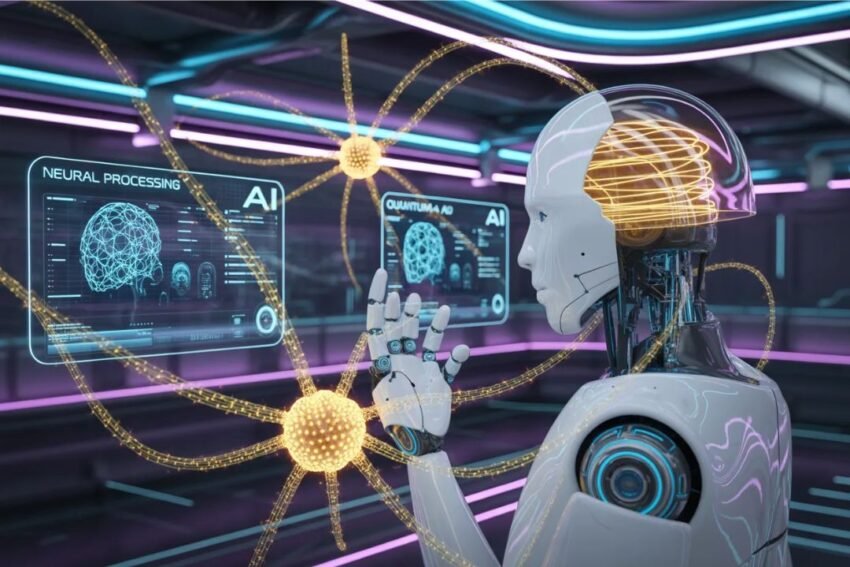
Machine learning (ML), a core subset of artificial intelligence (AI), has rapidly evolved from a niche technology to a transformative force across industries. By enabling systems to learn from data, detect patterns, and make predictions, ML is reshaping the way businesses operate, innovate, and interact with customers.
From healthcare to finance, retail, manufacturing, and logistics, machine learning trends are driving efficiency, personalization, and competitive advantage. This article explores the latest trends in ML and their impact on industries worldwide.
1. Understanding Machine Learning in Industry
Machine learning is the process by which computer systems improve their performance on tasks without explicit programming. ML algorithms analyze historical and real-time data to predict outcomes, automate decisions, and optimize processes.
Key Types of Machine Learning
- Supervised Learning: Uses labeled data to predict outcomes (e.g., fraud detection in banking).
- Unsupervised Learning: Finds patterns in unlabeled data (e.g., customer segmentation).
- Reinforcement Learning: Learns by trial and error to optimize actions (e.g., robotics).
- Deep Learning: Uses neural networks to analyze complex data like images, audio, and video.
Machine learning enables industries to become data-driven, improve decision-making, and automate previously manual tasks.
2. Trend 1: Predictive Analytics Driving Business Decisions
Predictive analytics uses ML algorithms to forecast outcomes and guide strategic decisions.
Applications
- Finance: Predicts stock trends, credit risk, and fraud patterns.
- Retail: Anticipates customer demand, optimizing inventory and marketing strategies.
- Healthcare: Predicts patient outcomes and disease progression for preventive care.
- Manufacturing: Forecasts equipment failures to enable predictive maintenance.
Impacts
Predictive analytics reduces uncertainty, enhances operational efficiency, and drives proactive decision-making. Companies that adopt predictive ML models gain a competitive edge by anticipating market trends and customer behavior.
3. Trend 2: Natural Language Processing (NLP) and Conversational AI
NLP enables machines to understand, interpret, and respond to human language, transforming customer engagement and data analysis.
Applications
- Customer Support: Chatbots and virtual assistants provide 24/7 service.
- Sentiment Analysis: Analyzes social media, reviews, and surveys to gauge customer perception.
- Document Processing: Automates legal, financial, and healthcare documentation.
- Voice Interfaces: Powers smart assistants like Alexa, Siri, and Google Assistant.
Benefits
NLP reduces manual workload, enhances customer experience, and provides actionable insights from unstructured text data.
4. Trend 3: ML in Predictive Maintenance
Machine learning is revolutionizing industrial operations with predictive maintenance, which identifies potential equipment failures before they occur.
Applications
- Manufacturing: Sensors collect equipment data, and ML predicts maintenance needs.
- Energy: Monitors turbines, generators, and pipelines to prevent downtime.
- Transportation: Predicts vehicle or fleet maintenance requirements.
Benefits
Predictive maintenance reduces unplanned downtime, lowers maintenance costs, and improves operational safety.
5. Trend 4: AI-Driven Personalization
Machine learning is powering hyper-personalized experiences in marketing, retail, and media.
Applications
- E-Commerce: Personalized product recommendations based on browsing history.
- Streaming Services: Content suggestions using viewing patterns and preferences.
- Advertising: Targeted campaigns driven by ML-powered audience segmentation.
- Healthcare: Personalized treatment plans and wellness recommendations.
Impacts
Personalization enhances customer engagement, loyalty, and satisfaction while improving conversion rates for businesses.
6. Trend 5: ML in Fraud Detection and Cybersecurity
Machine learning is critical for detecting anomalies, preventing fraud, and securing data.
Applications
- Banking: Identifies suspicious transactions and credit card fraud.
- Insurance: Detects fraudulent claims using pattern recognition.
- Cybersecurity: Detects malware, phishing, and network intrusions.
- E-Commerce: Prevents account takeovers and payment fraud.
Benefits
ML models can analyze massive datasets in real-time, identifying threats faster than traditional methods, enhancing trust and security in digital operations.
7. Trend 6: Computer Vision Transforming Industries
Computer vision, powered by deep learning, allows machines to interpret and analyze visual data.
Applications
- Healthcare: AI analyzes medical imaging for diagnosis, including X-rays, MRIs, and CT scans.
- Manufacturing: Automated quality control detects defects in products.
- Retail: Visual search, automated checkout, and inventory tracking.
- Security: Facial recognition and surveillance systems.
Impacts
Computer vision enhances accuracy, speeds up processes, and enables new capabilities such as automated inspection and intelligent monitoring.
8. Trend 7: Edge ML and Real-Time Analytics
Edge ML refers to deploying machine learning models closer to the data source rather than centralized servers.
Applications
- IoT Devices: Smart sensors in manufacturing, agriculture, and logistics analyze data locally.
- Autonomous Vehicles: Real-time decision-making on the edge ensures safety.
- Smart Cities: Edge analytics manage traffic, energy, and public services in real-time.
Benefits
Edge ML reduces latency, improves data privacy, and allows real-time responses in critical applications.
9. Trend 8: Automated Machine Learning (AutoML)
AutoML simplifies the process of building, training, and deploying ML models, making machine learning more accessible to non-experts.
Applications
- Business Intelligence: AutoML automates predictive modeling for finance, marketing, and operations.
- Healthcare Research: Accelerates the creation of models for patient diagnostics.
- Retail Analytics: Enables rapid experimentation and model deployment.
Impacts
AutoML democratizes ML adoption, reduces development time, and empowers businesses to leverage data-driven insights quickly.
10. Industry-Specific Machine Learning Transformations
Healthcare
- Predictive diagnostics and personalized medicine.
- Automation of administrative tasks.
- Drug discovery using ML models to predict molecular interactions.
Finance
- Fraud detection and anti-money laundering.
- Algorithmic trading and portfolio optimization.
- Risk assessment and credit scoring.
Manufacturing
- Smart factories with predictive maintenance.
- Quality control through computer vision.
- Supply chain optimization using ML forecasts.
Retail and E-Commerce
- Customer segmentation and hyper-personalization.
- Demand forecasting and inventory optimization.
- Visual search and recommendation engines.
Transportation and Logistics
- Autonomous vehicles and smart routing.
- Predictive maintenance of fleets.
- Real-time supply chain monitoring.
11. Challenges in ML Adoption
Despite the transformative potential, ML adoption faces challenges:
- Data Quality and Availability: ML models require large, clean datasets.
- Model Explainability: Understanding how complex models make decisions is essential for trust.
- Ethical Concerns: Bias and fairness must be addressed in decision-making models.
- Integration with Legacy Systems: Deploying ML in existing infrastructure can be complex.
Mitigation Strategies
Organizations should focus on high-quality data, transparency in algorithms, ethical AI frameworks, and phased integration approaches.
12. The Future of Machine Learning in Industries
The future of ML promises smarter, faster, and more adaptive systems:
- Explainable AI (XAI): Transparent models that are easier to understand and trust.
- Federated Learning: ML models train across decentralized devices, improving privacy.
- ML-Driven Innovation: Accelerated research in healthcare, energy, and materials science.
- Human-AI Collaboration: ML will augment human decision-making rather than replace it.
The continued evolution of ML will further streamline operations, enhance decision-making, and create new opportunities across industries.
Conclusion: Machine Learning as a Transformative Force
Machine learning is no longer confined to tech-savvy enterprises—it is a fundamental driver of innovation and efficiency across industries. From predictive analytics and personalization to fraud detection, computer vision, and automation, ML is reshaping how businesses operate and compete.
By staying ahead of machine learning trends, organizations can leverage data-driven insights, automate critical processes, and deliver superior products and services. The industries that embrace ML today are positioned to lead in efficiency, innovation, and customer satisfaction in the digital era.