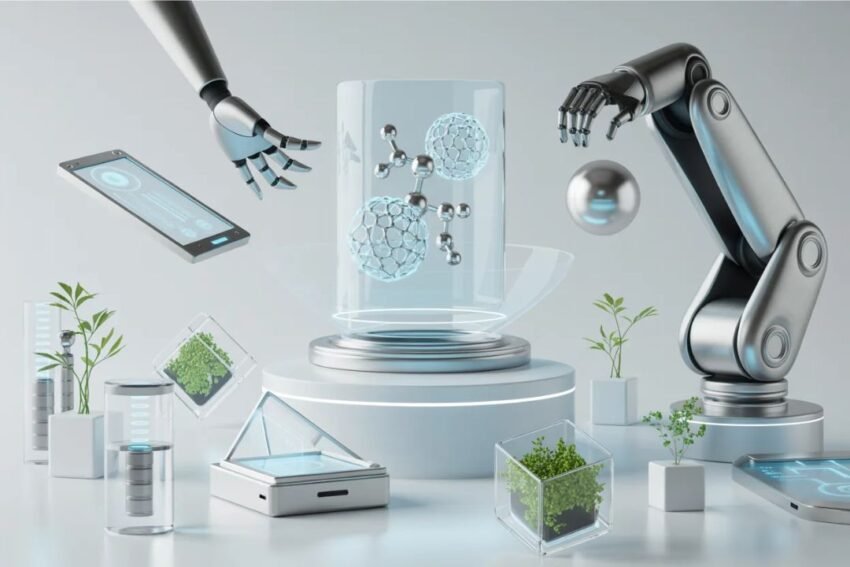
The pace of technological advancement is accelerating faster than ever before. Every year, new innovations redefine industries, economies, and daily life. Emerging technologies are not just futuristic concepts—they are actively shaping how we communicate, work, travel, and even understand the world around us. From artificial intelligence to quantum computing, the technologies emerging today promise to transform society in unprecedented ways. This article explores the top emerging technologies shaping tomorrow, their potential applications, and the challenges and opportunities they bring.
1. Artificial Intelligence and Machine Learning: Beyond Automation
Artificial Intelligence (AI) has moved from theory to practice, transforming business processes, healthcare, education, and entertainment. Machine learning, a subset of AI, allows systems to learn from data and make predictions without explicit programming.
Key Innovations in AI
- Generative AI: Models that create text, images, and music, revolutionizing content creation.
- AI in Healthcare: Predictive analytics for early disease detection, personalized medicine, and robotic surgery assistance.
- Autonomous Systems: Self-driving cars, drones, and industrial robots operating with minimal human intervention.
Impacts and Opportunities
AI increases efficiency, reduces human error, and creates entirely new industries. Ethical considerations, data privacy, and job displacement remain significant challenges as adoption accelerates.
2. Robotics and Automation: Machines That Enhance Human Capability
Robotics is moving beyond assembly lines into healthcare, agriculture, logistics, and even daily life. Advanced robotics combines sensors, AI, and precision engineering to perform complex tasks.
Emerging Trends
- Service Robots: Robots assisting in hospitals, homes, and public spaces.
- Exoskeletons: Wearable devices enhancing strength and mobility, particularly for rehabilitation and industrial work.
- Swarm Robotics: Coordinated robots performing tasks collectively in agriculture, environmental monitoring, and disaster response.
Implications
Robots enhance productivity, improve safety, and create new possibilities for human-machine collaboration. Society must address workforce retraining and the ethical deployment of autonomous machines.
3. Biotechnology and Genetic Engineering: Shaping Life Itself
Biotechnology is reshaping healthcare, agriculture, and environmental sustainability. Technologies like CRISPR and synthetic biology allow scientists to edit genes, engineer microbes, and design bio-based solutions.
Breakthroughs
- Gene Editing: CRISPR enables targeted DNA modifications for treating genetic diseases and improving crop resilience.
- Personalized Medicine: Customized treatments based on genetic profiles.
- Biofuels and Environmental Solutions: Microbes engineered to produce sustainable fuels and reduce pollution.
Challenges
Biotechnology raises ethical questions about gene editing, cloning, and environmental impacts. Regulatory frameworks are critical to ensure safe, responsible innovation.
4. Quantum Computing: A New Era of Computational Power
Quantum computing represents a radical shift from classical computing. Using qubits, quantum computers can solve complex problems exponentially faster than conventional systems.
Key Developments
- Quantum Algorithms: Solving problems in cryptography, optimization, and material science.
- Quantum Networks: Ultra-secure communication leveraging quantum entanglement.
- Hybrid Systems: Combining classical and quantum computing for practical applications.
Potential Impacts
Quantum computing could revolutionize industries like pharmaceuticals, finance, and logistics. Widespread adoption is still in development, but its potential is immense.
5. Renewable Energy and Energy Storage: Powering a Sustainable Future
As the world grapples with climate change, renewable energy technologies are advancing rapidly. Solar, wind, hydro, and emerging sources like hydrogen fuel are becoming increasingly efficient.
Innovations
- Next-Gen Solar Cells: Perovskite and tandem solar cells with higher energy conversion efficiency.
- Offshore Wind Farms: Smart turbine technologies generating more consistent power.
- Advanced Batteries: Longer-lasting, safer, and more efficient energy storage solutions.
Benefits
Renewable energy reduces carbon emissions, creates jobs, and supports energy independence. Efficient storage systems address intermittency challenges, enabling a stable, green energy future.
6. Internet of Things (IoT) and Smart Cities: Connected Everything
IoT connects everyday devices to the internet, enabling seamless communication and automation. Smart cities leverage IoT to optimize traffic, energy, public safety, and healthcare services.
Key Trends
- Smart Homes: Appliances, security systems, and lighting controlled remotely or automatically.
- Healthcare IoT: Wearable devices monitoring health in real-time.
- Industrial IoT (IIoT): Sensors and analytics improving manufacturing efficiency and predictive maintenance.
Implications
IoT drives convenience and operational efficiency but also raises cybersecurity and data privacy concerns. Secure and scalable deployment is critical.
7. Extended Reality: VR and AR Transforming Experiences
Virtual Reality (VR) and Augmented Reality (AR) are reshaping entertainment, education, and professional training. Immersive experiences allow users to interact with digital worlds in unprecedented ways.
Applications
- VR Workspaces: Remote collaboration and training in immersive environments.
- AR Education: Interactive learning with 3D models for complex subjects.
- Medical AR: Guiding surgeons during procedures for improved precision.
Societal Impacts
These technologies enhance creativity, engagement, and skill acquisition. Challenges include digital addiction, accessibility, and ethical use.
8. Blockchain and Decentralized Finance (DeFi): Redefining Trust
Blockchain technology underpins cryptocurrencies and has far-reaching applications in finance, supply chains, healthcare, and more. Its decentralized, tamper-proof nature ensures transparency and security.
Innovations
- Decentralized Finance (DeFi): Peer-to-peer financial services without intermediaries.
- Supply Chain Transparency: Blockchain tracking ensures product authenticity and reduces fraud.
- Smart Contracts: Automated agreements executed securely without human intervention.
Implications
Blockchain can reduce costs, enhance security, and democratize access to financial services. Scalability and regulatory hurdles remain significant challenges.
9. 5G and Next-Generation Connectivity: The Speed of Tomorrow
High-speed, low-latency networks like 5G enable real-time communication, IoT proliferation, and immersive digital experiences.
Emerging Uses
- Autonomous Vehicles: Real-time traffic data and vehicle-to-vehicle communication.
- Remote Healthcare: Real-time monitoring and telemedicine.
- Smart Infrastructure: Connected devices for efficient city management.
Impact
5G accelerates technological adoption across industries, but widespread infrastructure deployment is still underway. Security and privacy in high-speed networks remain critical.
10. Space Technologies: Expanding the Final Frontier
Space exploration is no longer the domain of governments alone. Private companies are developing spacecraft, satellites, and technologies for lunar and Martian exploration.
Key Innovations
- Reusable Rockets: Reducing the cost of space travel.
- Satellite Mega-Constellations: Global internet coverage and advanced earth monitoring.
- Space Mining: Extracting resources from asteroids for use on Earth and in orbit.
Future Potential
Space technologies can drive innovation on Earth, support resource extraction, and enable human colonization beyond our planet. Regulatory frameworks and sustainability considerations are essential for responsible expansion.
Conclusion: Embracing Tomorrow’s Technologies Today
The technologies emerging today are more than tools—they are reshaping economies, industries, and societies. Artificial intelligence, robotics, biotechnology, quantum computing, IoT, extended reality, blockchain, renewable energy, 5G, and space technologies are all driving the world toward a more connected, intelligent, and sustainable future.
While challenges like ethical concerns, cybersecurity, and accessibility remain, the opportunities are immense. By embracing innovation responsibly, humanity can harness these technologies to solve global problems, improve quality of life, and unlock new frontiers of knowledge and possibility.
The future is being shaped by the technologies we develop today—and the horizon looks smarter, greener, and more interconnected than ever.